
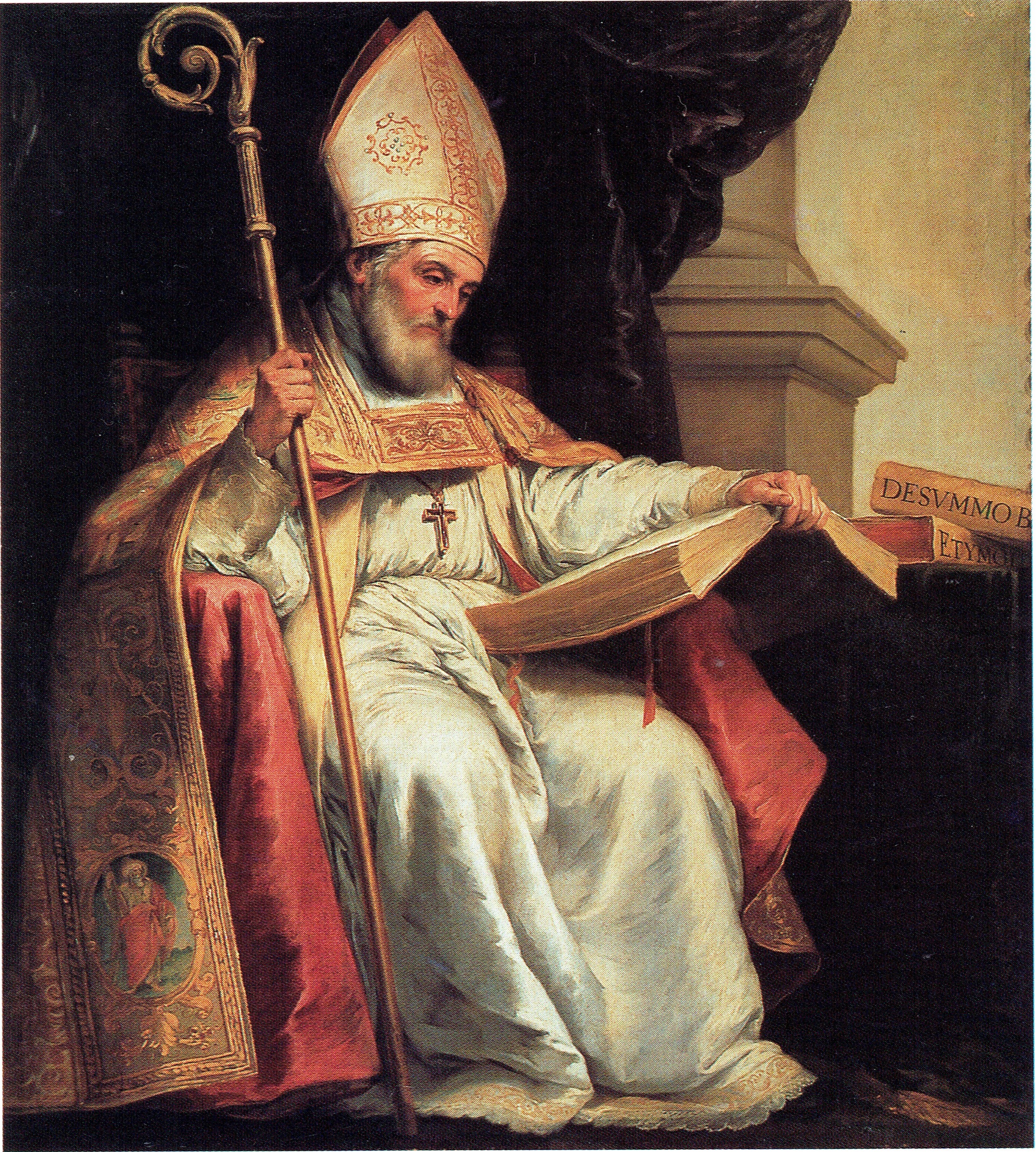
Isidore of Seville
Spanish archbishop whose encyclopedic writings shaped medieval Christian learning and theology.
Patronage
Scholars, theologians, students, computers, internet, Spain, Seville, teachers
Virtues & Traits
Biography
Isidore of Seville (560-636) was a Spanish archbishop and prolific Christian scholar whose works profoundly influenced medieval thought and spirituality. Born into a devout family, he became Archbishop of Seville and led the Spanish Church through the Visigothic period with remarkable learning and administrative skill. Isidore's masterwork, the Etymologiae, was an encyclopedic compilation of knowledge covering theology, science, grammar, history, and natural philosophy—essentially an early medieval encyclopedia that became foundational for European education for centuries. He authored numerous biblical commentaries, theological treatises, and rules for monastic life. Isidore convened the Fourth Council of Toledo, which advanced ecclesiastical discipline and orthodoxy. He championed the cause of Saint James the Greater in Spain and promoted ecclesiastical unity. His systematic intellectual approach to preserving and organizing knowledge earned him recognition as a Doctor of the Church. Isidore epitomized the Christian scholar using learning in service of faith, establishing himself as the most influential theologian of the early medieval West.
Prayer
Prayer to St. Isidore of Seville
O glorious Saint Isidore, Bishop and Doctor of the Church, whose learning illuminated the world and whose wisdom guided countless souls to truth, we humbly beseech you to intercede for us before the throne of Almighty God. Grant us the grace to seek knowledge in service of faith, to use our gifts for the glory of God and the good of our neighbor, and to grow ever deeper in understanding of His divine mysteries. Through your powerful intercession, obtain for us the wisdom to discern truth from falsehood, and the courage to defend the faith in our own time. Saint Isidore, pray for us. Amen.
Generated by Find My Saint for personal reflection. Not an official Church prayer.