
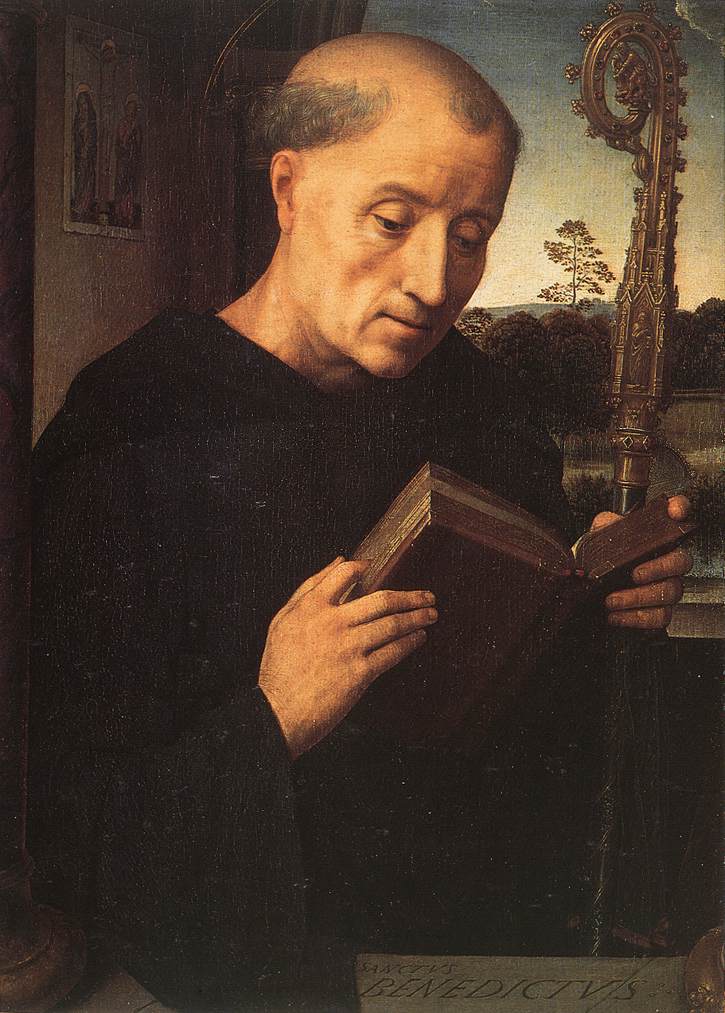
Benedict of Nursia
Italian monk whose Rule created Western monasticism and preserved civilization through medieval centuries.
Patronage
Europe, monasticism, students, scholars, farmers, engineers, Italy, against poisoning, against witchcraft
Virtues & Traits
Biography
Benedict of Nursia (c. 480-547) was an Italian monk and founder of Western monasticism whose Rule shaped Christian culture for fifteen centuries. Born in Nursia, he withdrew to mountain solitude seeking spiritual perfection, eventually attracting disciples. Rather than pursuing extreme asceticism, Benedict developed a moderate, sustainable approach to monastic life centered on prayer, work, and community. He established his primary monastery at Monte Cassino (529), creating a self-sufficient community governed by his written Rule. The Rule balances strict discipline with compassion, manual labor with intellectual work, and silence with meaningful speech. Benedict emphasized the abbot as father-figure and established stability of place as essential to spiritual growth. His vision created a stable institutional framework that preserved learning through Dark Ages, advanced agricultural innovation, and profoundly influenced European civilization. Canonized as the father of Western monasticism, Benedict represents the integration of spiritual aspiration with practical wisdom.
Prayer
Prayer to St. Benedict of Nursia
O glorious St. Benedict, sublime model of virtue and wisdom, we humbly beseech thee to intercede for us before the throne of Almighty God. By thy holy example of obedience, poverty, and chastity, guide us in the ways of righteousness and peace. Strengthen our resolve to overcome temptation and sin, and help us to build within our hearts a monastery of prayer and devotion. Through thy powerful intercession, obtain for us the grace to serve God faithfully all the days of our lives, and to attain at last the eternal reward promised to the faithful. Amen.
Traditional prayer from Catholic tradition