
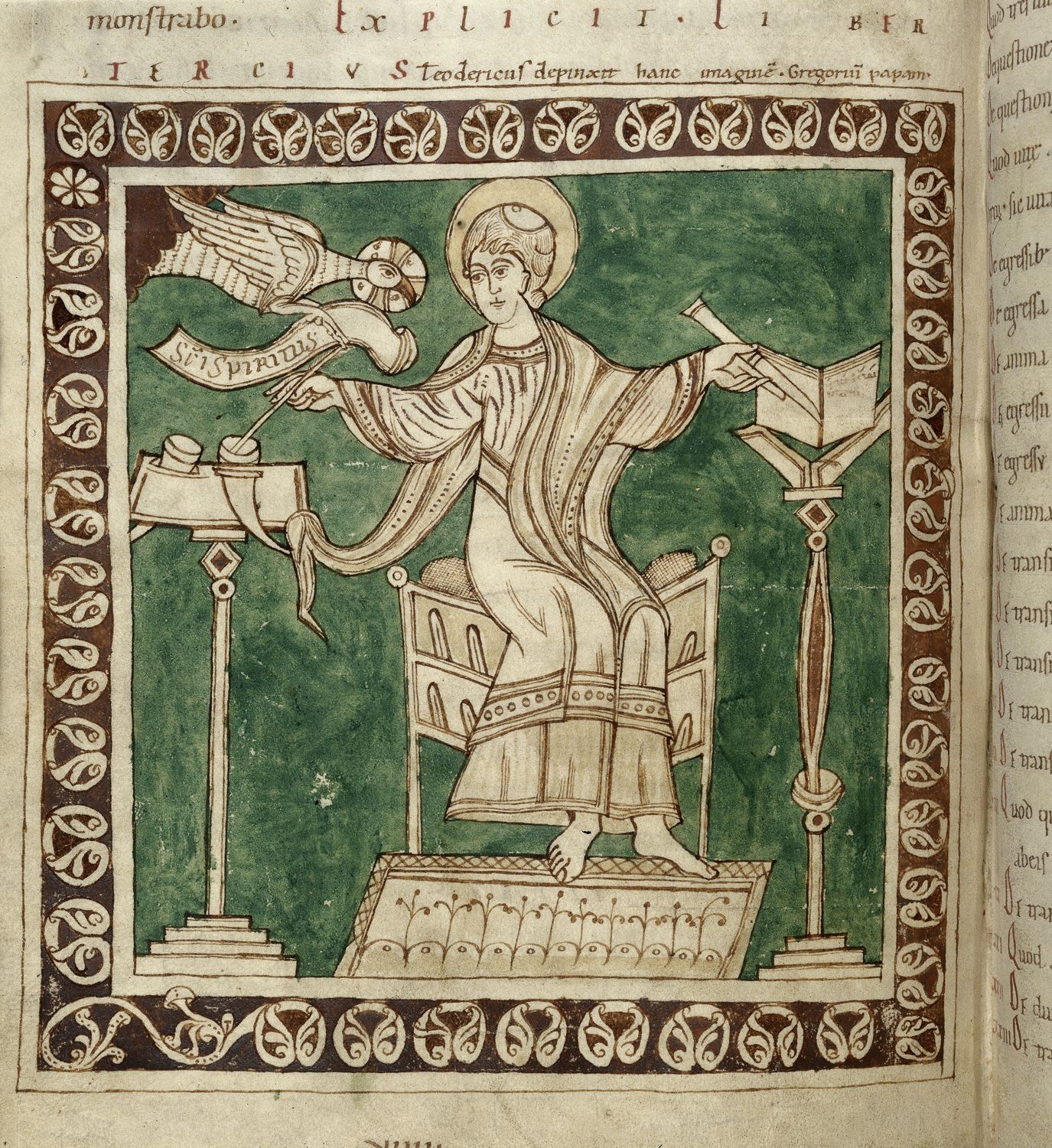
Gregory the Great
Pope and Doctor of the Church who reformed clergy and evangelized England.
Patronage
Scholars, teachers, musicians, singers, students, Rome, tanners
Virtues & Traits
Biography
Born around 540 in Rome to a wealthy patrician family, Gregory initially pursued a secular career, becoming prefect of Rome. After his father's death, he withdrew from public life and founded a monastery, becoming a monk himself. Reluctantly ordained as Pope in 590, Gregory proved an exceptional administrator, consolidating Church authority, reforming clerical discipline, and establishing the papal states' temporal power. He excelled in pastoral theology, emphasizing the bishop's care for souls. Gregory expanded missionary efforts, famously sending Augustine of Canterbury to evangelize England. He standardized liturgical practices, shaping what became known as Gregorian chant. A prolific writer, he authored influential spiritual works including the Pastoral Care and biblical commentaries. Gregory confronted the Arian heresy, worked to alleviate Rome's poverty through charitable redistribution, and negotiated peace with invading Lombards. Despite chronic illness, he served tirelessly until his death in 604. His papacy established lasting ecclesiastical practices and spiritual principles.
Prayer
Prayer to St. Gregory the Great
O glorious St. Gregory, great Doctor of the Church, whose wisdom and holiness have illuminated the faithful throughout the ages, we humbly beseech thee to intercede for us before the throne of Almighty God. Grant us the grace to grow in virtue, to serve the Church with steadfast devotion, and to seek always the greater glory of God. Through thy powerful intercession, may we be strengthened in faith and guided toward eternal salvation. Amen.
Generated by Find My Saint for personal reflection. Not an official Church prayer.